
![]() |
||||||||||
|
|
Deaf-Blind CommunityCarol
Brown-Wollin
Jelica
Nuccio,
Seattle
Deaf Blind Service Center,
Seattle, WA
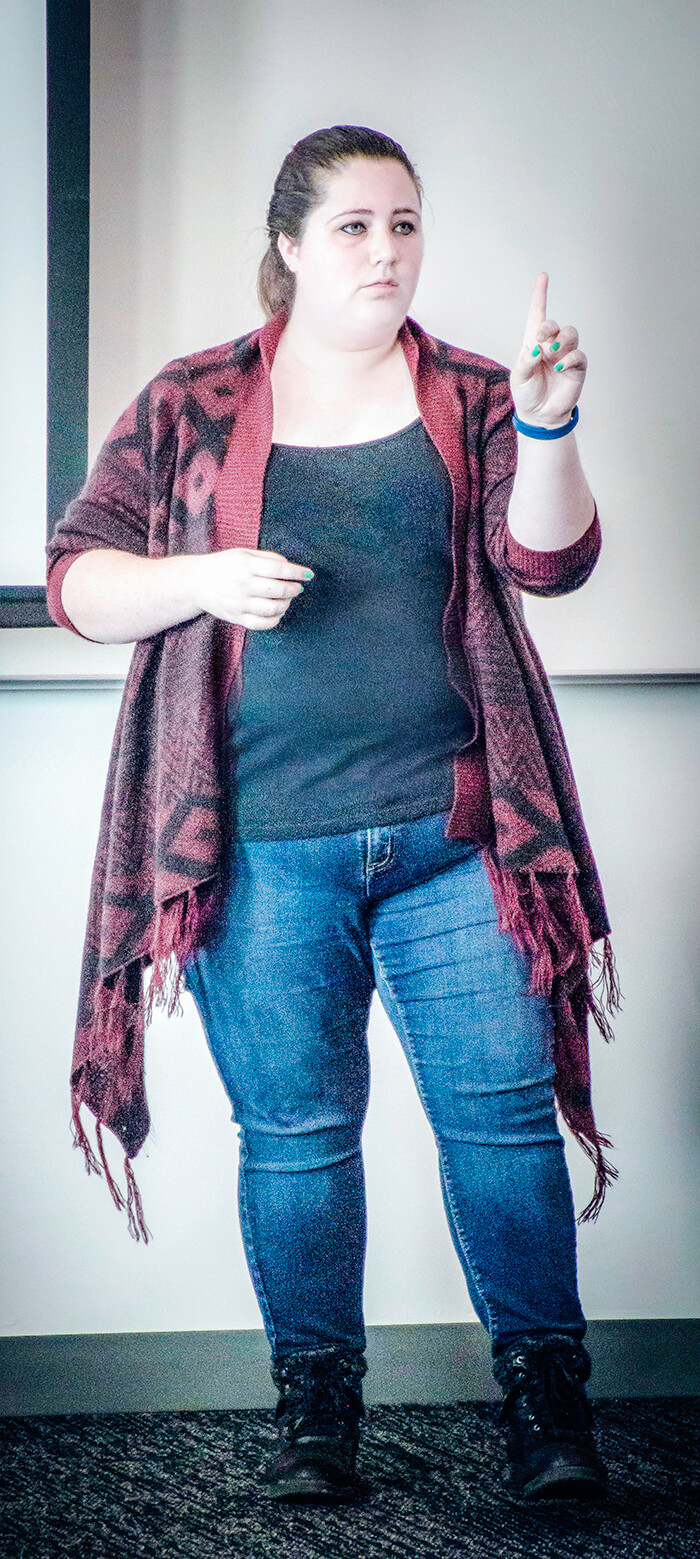
OPENING SKIT: "THE FUTURE" The scene is a job development/placement office. Brown-Wollin played a talking computer, while Nuccio played Victoria, a client who is deaf-blind. The computer provided Victoria with its analysis from her testing:
DOB: 1979 Vision: 45% Hearing Level: 0% Brain Wave Activity: 89% Motivation Level: 90% Physical Examination: Passed Job Title: Restaurant Worker BARRIERS TO EMPLOYMENT The point of this skit is to recognize that deaf-blind people have been facing very limited job opportunities. Because of the barriers from standard job tests and computer assessments, deaf-blind people are being denied jobs they are qualified to do. Deaf-blind people do not fit society’s expectations. The purpose of today’s workshop for postsecondary professionals and vocational rehabilitation counselors is to discuss deaf-blind people’s potential and to focus on what they can do, not what they cannot do. The challenge is to be creative, have an open mind, and to be mindful of your attitude when serving deaf-blind consumers. Attitude is the most vital factor in removing barriers. Vocational rehabilitation and postsecondary professionals who work with deaf-blind consumers or students should understand that the key to any assessment is an open mind and an appropriate attitude. Remember, most general assessments used for other consumers do not work with deaf-blind consumers. Deaf-Blind people have talents and keen skills but often are limited by the professional’s choice of a career for them, including career moves. For example, some of the professionals automatically seek entry-level jobs for deaf-blind individuals because they assume few skills are required. However, the outcome may not be successful because most entry-level jobs require vision. The client, without appropriate accommodations, will fail, and the counselor will once again have to work with the individual to find another job. There is no formal protocol or step-by-step guidelines for counselors working with deaf-blind job seekers such as researching, job development, job placement, job shadowing, job testing, and the rest. The emphasis must be on creativity and attitude. Presenter Nuccio shared her career experience to help workshop participants to brainstorm solutions:
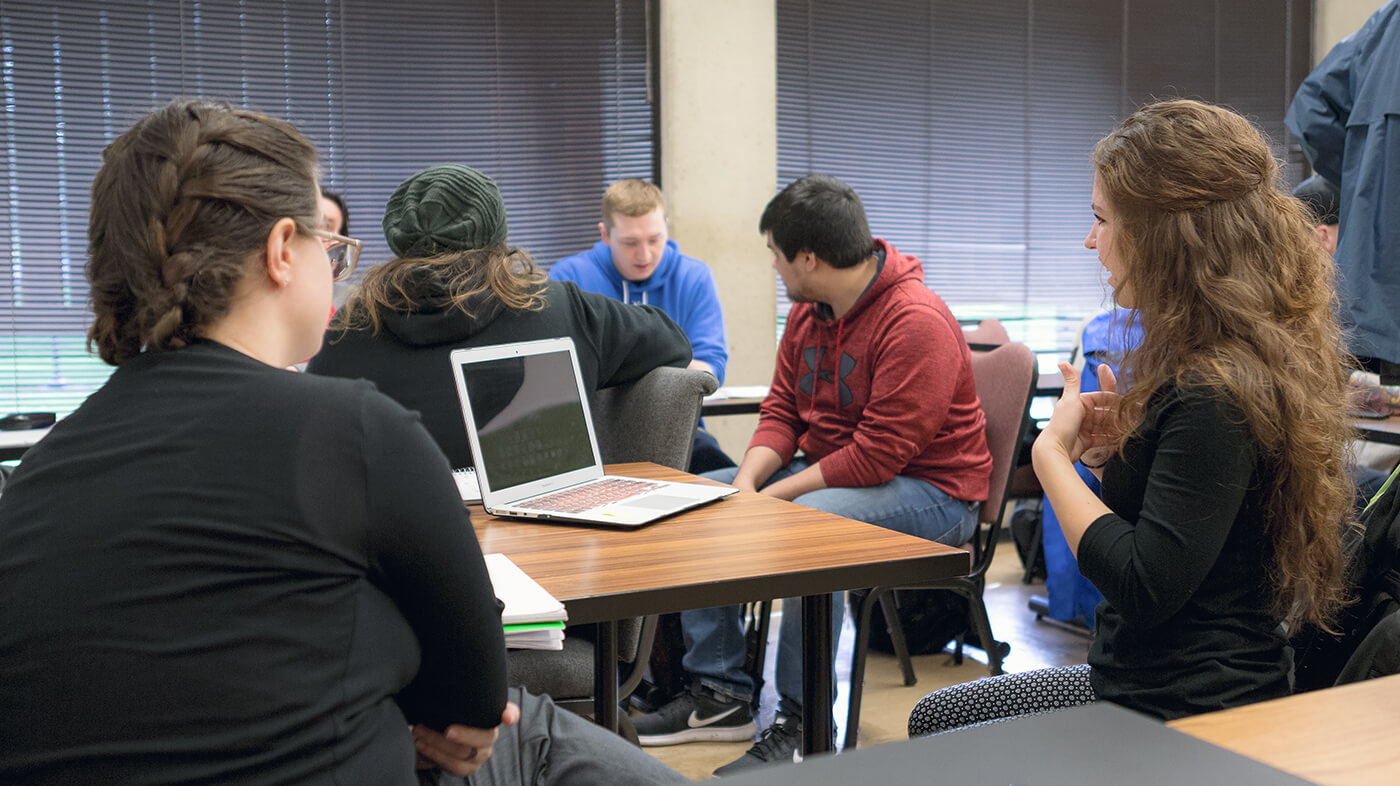
EXPERIENTIAL ACTIVITY Each person in the audience was blindfolded, and then asked to read black print on red paper. This activity lasted about fifteen minutes. If people needed to communicate with each other, they were asked to do by signing. No voices were allowed. This activity provides a hands-on experience of what it might feel like to be the deaf-blind person sitting in the placement counselor’s business office. The workshop participants were asked to share their comments after they removed the blindfolds. The comments were telling of many deaf-blind individuals’ experiences: My
eyes felt fatigued. I wanted
to go sleep.
I
could not remember what
I was reading. I would lose
the place where I had left
off because of my limited
vision.
I
felt so different.
I could “see” the world
before, but then after putting
on the blindfold, my vision
was so limited.
The
audience was asked specifically
if the red paper was hard to
read. They answered,
“Yes, the color was overwhelming
for me. It is too visually overpowering.”They
were then asked if the communication
was different than from what
they expected. One response
summarized their feelings: “I
had a hard time communicating
because I needed to trust the
person who is trying to communicate
with me.” Without visual cues
and sounds, they had a difficult
time developing a communication
relationship.
This experience illustrated the need for appropriate accommodations for deaf-blind students or VR participants:
The
last hour of this workshop we
have emphasized the critical
importance of having an open
mind, and an appropriate attitude.
We have offered an experience
of what it is like to be deaf-blind
and what barriers are involved.
Finally, we encourage the use
of the resources. Resources
include both support system
services and deaf-blind individuals
themselves. They can be a rich
source of information for you.
The handouts
provided contain a Deaf-Blind
Resource List, Helpful Tips
for Communication and Guiding,
Usher’s Syndrome Information,
and Bibliographies CONCLUSION Several factors must be considered in job development, such as time, attitude, support, adaptations and accommodations. Focus on what the deaf-blind person can do. Individuals who are deaf-blind can achieve goals with support systems, which might include large print, interpreters, adaptive equipment, and orientation and mobility training. Our responsibility is our ATTITUDE. WROCC at WOU
345 North Monmouth Avenue Monmouth, OR 97361 |
|||||||||